Industrial Partnerships for a New Era: NICCI Advances Nigeria–Indonesia Collaboration at West Africa IMT 2026
- March 4, 2026
- Posted by: A A
- Category: Uncategorized
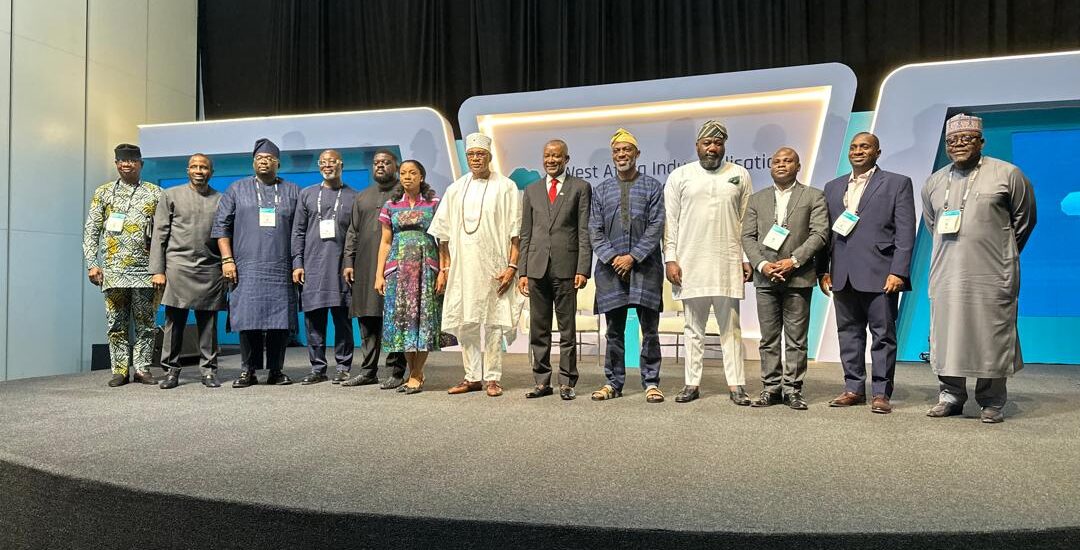
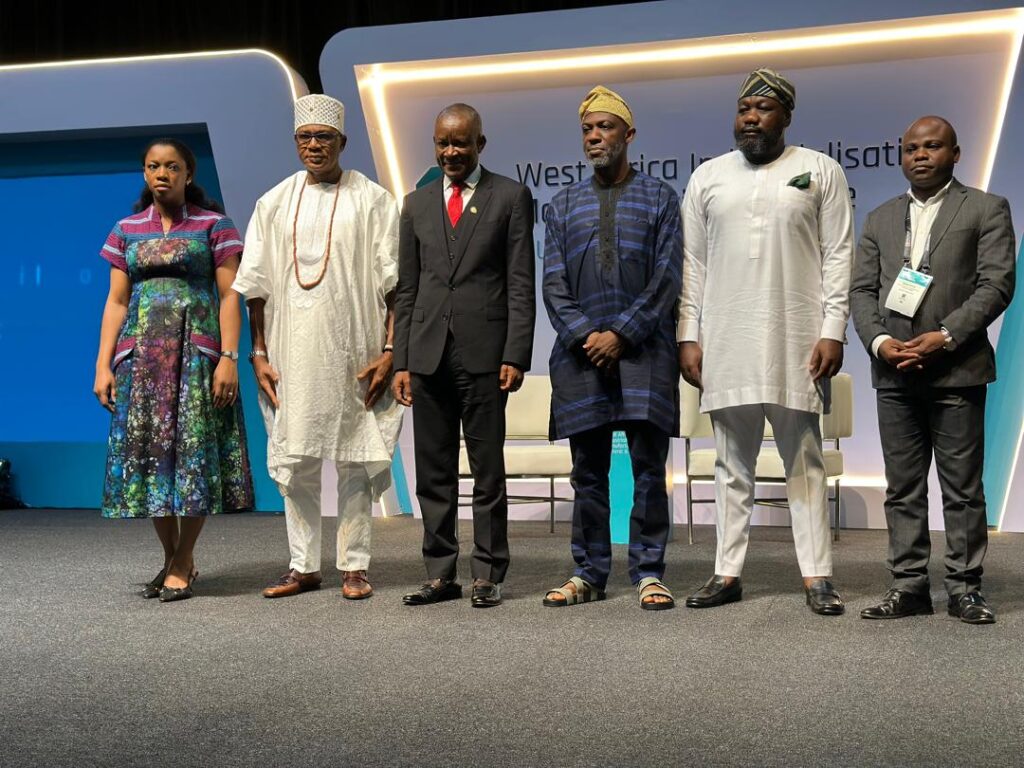
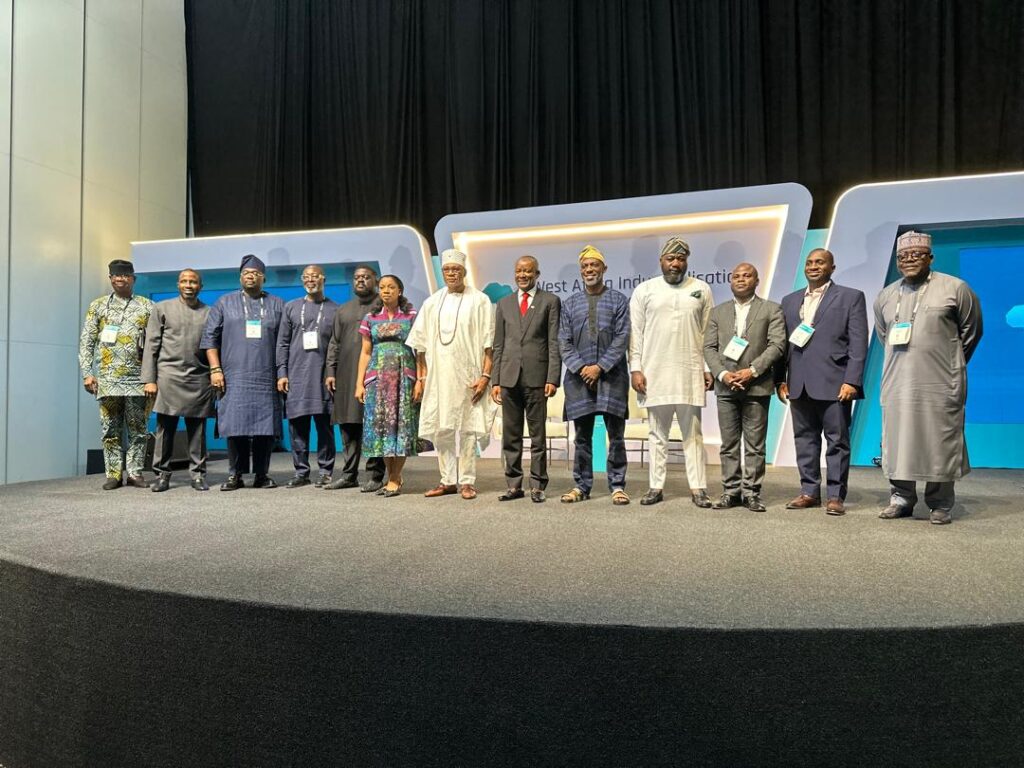
The Nigerian–Indonesian Chamber of Commerce and Industry (NICCI) played a prominent role at the West Africa Industrialisation, Manufacturing & Trade (IMT) Summit & Exhibition 2026, held from March 3 to 5 at the Landmark Event Centre in Lagos. The three-day gathering brought together government leaders, diplomats, manufacturers, investors, development partners, and policy stakeholders from across the region to explore practical pathways for strengthening industrial growth and trade integration in West Africa. Widely regarded as one of the region’s most important industry convenings, the summit served as a strategic platform for aligning policy priorities with private-sector investment and implementation strategies aimed at accelerating sustainable economic development.
Organised by dmg events, the summit opened with welcoming remarks from Wemimo Oyelana, Country Director of dmg events Nigeria, who underscored the importance of collaboration between governments and the private sector in unlocking West Africa’s industrial potential. She noted that the region’s vast natural resources, expanding population, and youthful workforce provide a powerful foundation for industrial transformation, but emphasised that meaningful progress will depend on stronger coordination among stakeholders, clear policy direction, and investment-driven solutions capable of translating opportunity into productive capacity.
The keynote address was delivered by Gautier Mignot, Ambassador of the European Union to Nigeria and ECOWAS, who reaffirmed the European Union’s commitment to supporting industrial development across the region. Ambassador Mignot highlighted ongoing cooperation between the European Union and West African economies in areas such as trade facilitation, sustainable manufacturing, and capacity development. He emphasised that stronger industrial partnerships between Africa and global economies will be essential for improving competitiveness, strengthening value chains, and expanding market access for African products.
High-level government participation further reinforced the strategic importance of the summit. A comprehensive policy presentation was delivered by John Ugochukwu Uwajumogu, Special Adviser to the President of Nigeria on Industry, Trade and Investment. In his address, Uwajumogu outlined the Federal Government’s commitment to deepening industrial reforms, improving investment facilitation mechanisms, and strengthening domestic manufacturing capacity. He stressed that Nigeria’s long-term economic stability will depend on its ability to reduce import dependence and build resilient production systems that integrate the country more effectively into continental and global value chains.
The summit also featured an address by John Owan Enoh, Honourable Minister of State for Industry, who elaborated on the Federal Government’s strategy for revitalising the manufacturing sector through policy consistency, regulatory reform, and institutional coordination. The Minister highlighted efforts to deepen backward integration across priority sectors including agro-processing, industrial machinery, and engineering services. He also emphasised the importance of strengthening small and medium-sized enterprises through improved access to finance, skills development initiatives, and expanded industrial infrastructure, noting that sustainable industrialisation must be built on a foundation of innovation, technology adoption, and inclusive growth.
A defining feature of West Africa IMT 2026 was the international exhibition, which showcased a wide range of industrial solutions spanning manufacturing equipment, agro-processing technologies, energy systems, logistics platforms, and engineering innovations. Leading industry players including Flour Mills of Nigeria, Coleman Wires & Cables, Tranos, and Foton Motor participated alongside numerous global technology providers and industrial suppliers. With more than 250 companies exhibiting across multiple sectors, the exhibition created an interactive environment for product demonstrations, business-to-business engagement, and investment discussions, enabling manufacturers, suppliers, and investors to explore practical partnerships capable of strengthening the region’s industrial ecosystem.
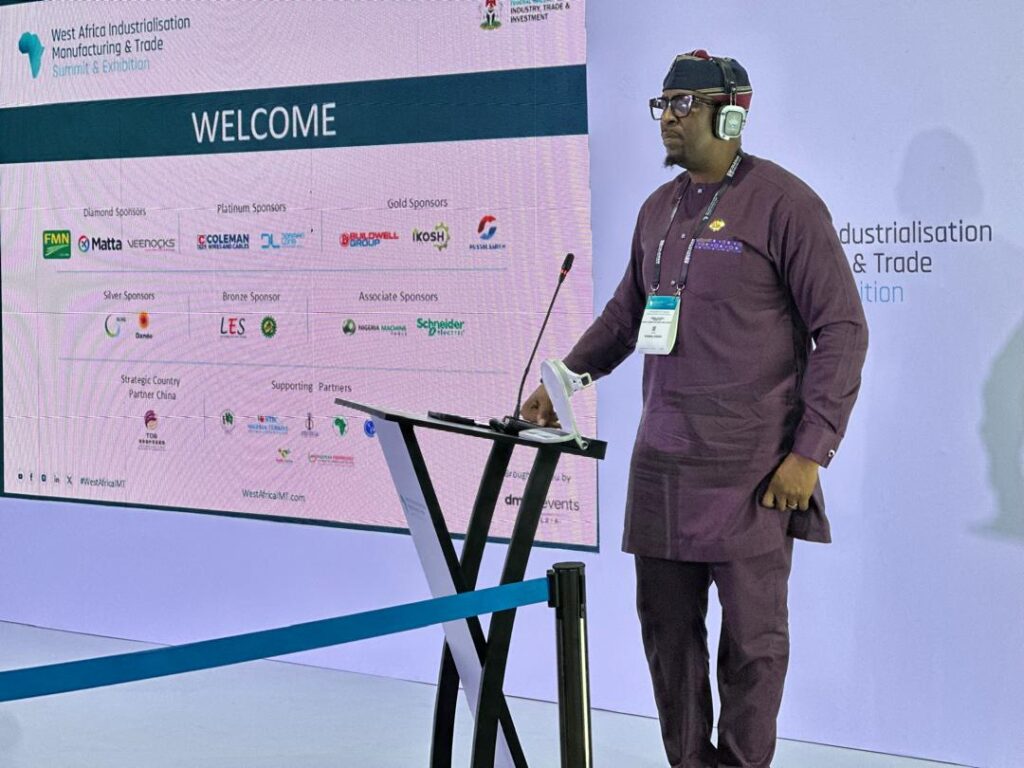
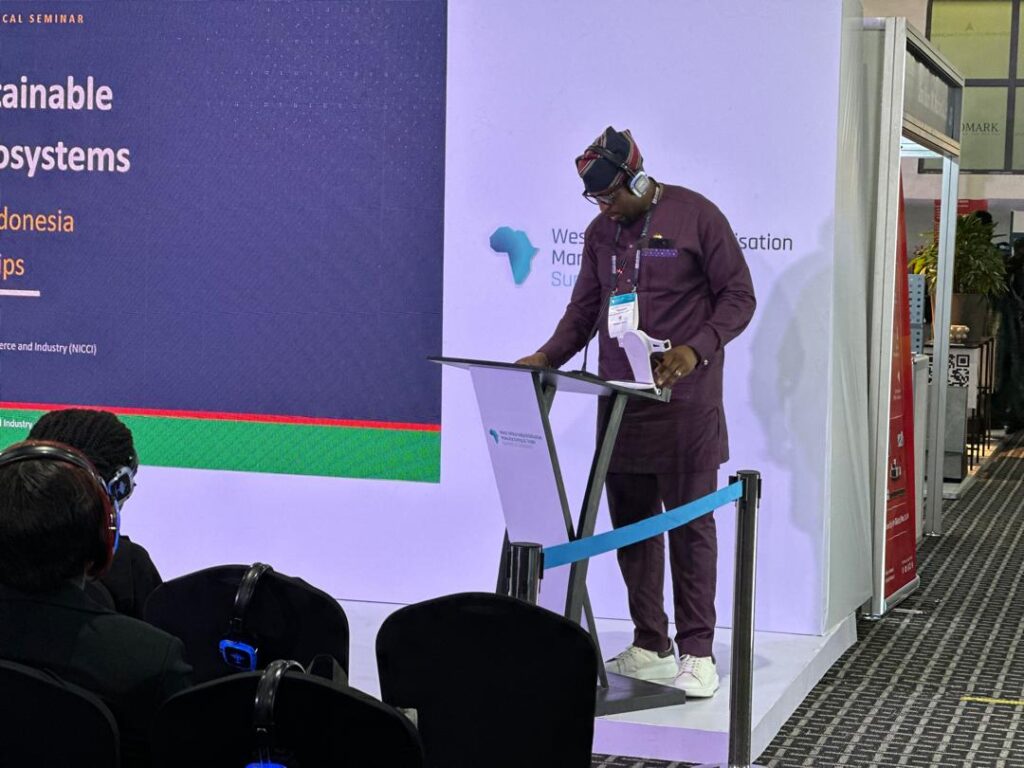
Within the technical seminar segment of the summit, the President of the Nigerian–Indonesian Chamber of Commerce and Industry, Ishmael Balogun, delivered a strategic presentation titled “Building Sustainable Industrial Ecosystems through Nigeria–Indonesia Strategic Partnerships.” In his remarks, Balogun emphasised that genuine industrial transformation goes beyond the construction of factories; it requires the deliberate development of interconnected ecosystems supported by stable policy frameworks, reliable infrastructure, affordable energy, access to long-term capital, and strong private-sector participation.
Drawing lessons from Indonesia’s own industrial development trajectory, he outlined practical collaboration pathways capable of accelerating Nigeria’s manufacturing capacity. These included the creation of agro-industrial investment corridors, technology transfer partnerships, machinery and equipment collaboration, and localised assembly frameworks designed to increase domestic production. Balogun further highlighted the importance of risk-sharing investment mechanisms that encourage cross-border industrial financing while promoting knowledge exchange, workforce development, and skills transfer between both countries.
The NICCI President also pointed to existing Nigeria–Indonesia engagements as proof of concept for deeper cooperation and presented a forward-looking vision in which structured bilateral partnerships could significantly expand manufacturing output, boost export competitiveness, and reduce dependence on imported industrial goods. According to him, sustained collaboration between the two countries could help Nigeria achieve stronger manufacturing contributions to GDP within the next decade while positioning the country as a key industrial hub within West Africa.
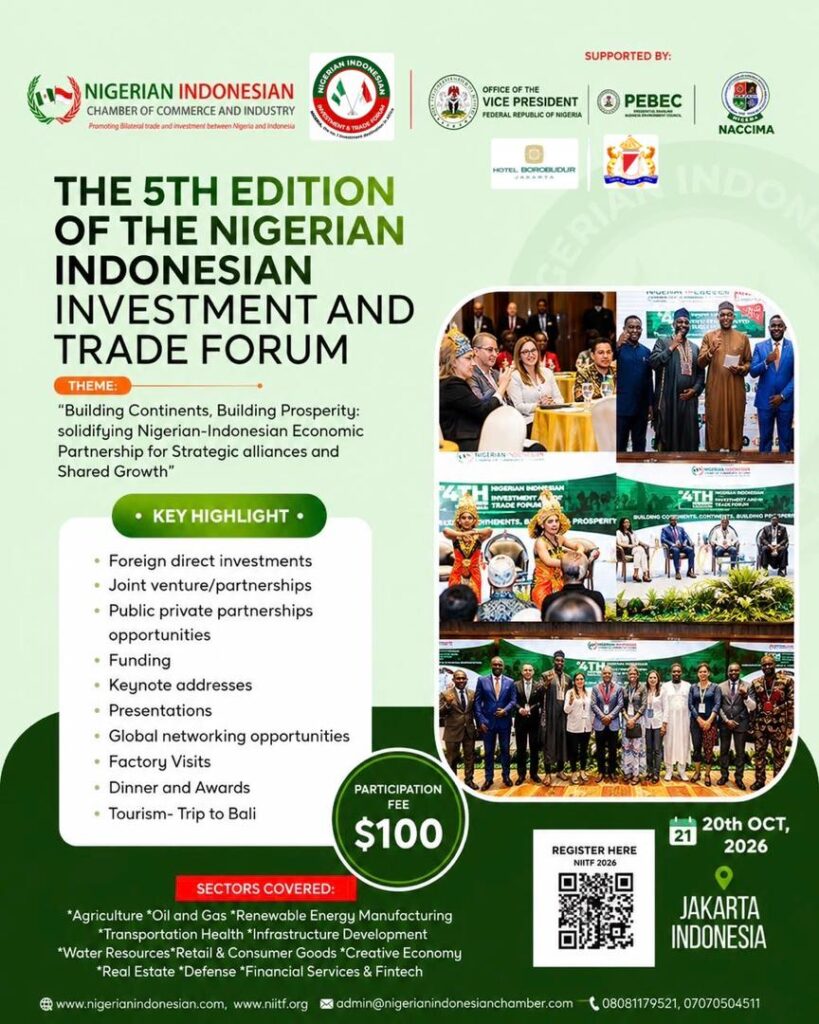
NICCI’s participation at the summit also reinforced its broader institutional mission of strengthening economic cooperation between Nigeria and Indonesia through structured trade, investment, and industrial partnerships. In line with this objective, the Chamber continues to expand its strategic platforms, including preparations for the upcoming Nigeria–Indonesia Investment and Trade Forum (NIITF) 2026, which is expected to bring together policymakers, investors, and industry leaders from both countries to explore new opportunities in manufacturing, agriculture, infrastructure, and technology.
Through engagements such as West Africa IMT, NICCI remains committed to promoting forward-looking economic dialogue while facilitating the partnerships required to transform Nigeria’s industrial ambitions into measurable outcomes. As the global economy continues to evolve, platforms that foster collaboration, technology exchange, and investment alignment will be critical to ensuring that Nigeria and its partners build resilient industrial ecosystems capable of supporting sustainable growth and long-term prosperity.